
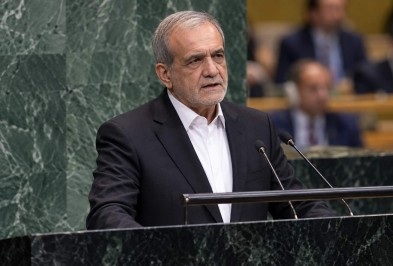
Iranian President Masoud Pezeshkian addressed the United Nations General Assembly, criticizing U.S. President Donald Trump while expressing Iran’s readiness for dialogue and negotiations. Pezeshkian emphasized that any talks should not occur under threats or military pressure, highlighting Tehran’s stance amid ongoing tensions between the two nations.
The Iranian president’s remarks followed Trump’s statement at the UN, where he mentioned the possibility of further actions against Iran and noted the potential for renewed discussions. Concurrently, Iranian Foreign Minister Abbas Araghchi engaged in a three-hour meeting with U.S. special envoy Steve Witkoff. These talks, mediated by Qatar, focused on Iran’s terms for resolving conflicts and reducing pressure on the country.
Pezeshkian reiterated Iran’s desire for a peaceful nuclear program and denied any pursuit of nuclear weapons, advocating for regional security cooperation over reliance on external forces. A significant issue in these discussions is the Strait of Hormuz, a critical waterway for international shipping and energy markets, which Iran suggests could be reopened if certain conditions are met, including the cessation of military and economic pressures.
Iranian officials outlined Tehran’s conditions, which include ending hostilities, lifting the naval blockade, easing economic sanctions, and releasing Iranian assets. Pezeshkian accused the United States and Israel of aggressive actions against Iran, defending Tehran’s moves as acts of self-defense amid increasing economic pressures and challenges in oil exports due to ongoing sanctions.
The latest diplomatic engagements suggest that despite substantial disagreements over the conflict, sanctions, and Iran’s nuclear ambitions, dialogue remains a viable path forward between Washington and Tehran.