
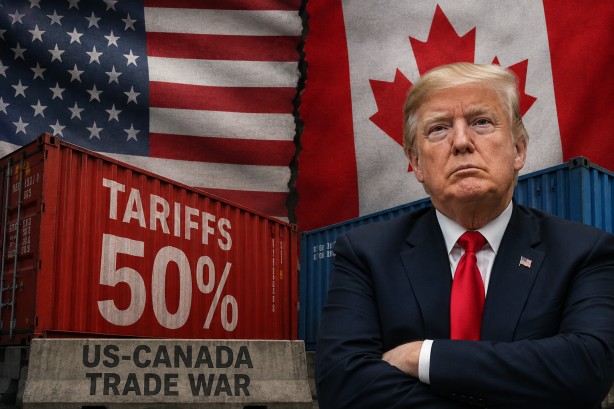
The trade tensions between the United States and Canada have intensified as President Donald Trump has decided to impose steep tariffs on Canadian imports. The breakdown of negotiations in Washington has resulted in the U.S. implementing 50% tariffs on approximately $20 billion worth of Canadian goods. Products affected by these tariffs include hockey sticks and medical supplies, among others.
In response to these measures, Canadian Prime Minister Mark Carney announced that his country would retaliate with equivalent tariffs on U.S. goods. Carney declared that Canada would impose these countermeasures “dollar for dollar” beginning September 8. He described the U.S. actions as an attack on Canada and emphasized that his government would not comply with the demands presented during the recent negotiations.
On the U.S. side, Trade Representative Jamieson Greer justified the tariffs as necessary steps to safeguard American workers and maintain the integrity of supply chains. This stance underscores the growing trade rift between the two nations and adds fuel to an already heated dispute.
The escalating situation has sparked concerns regarding the future of the United States-Mexico-Canada Agreement (USMCA), a crucial trade pact that facilitates around $2 trillion in annual trade among the three countries. The potential impact of this trade conflict could lead to increased costs for businesses and consumers and place further strain on the economic ties between the U.S. and Canada.