
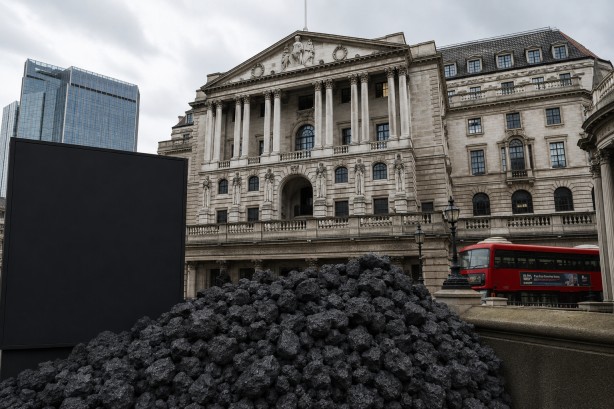
The Bank of England is set to cease accepting bonds tied to thermal coal companies as collateral for its lending activities starting in October, a move that underscores its commitment to mitigating climate-related financial risks. This decision signifies a crucial development in the central bank’s strategy to address environmental concerns within its financial operations.
In banking practices, commercial banks often use bonds as collateral when borrowing from the central bank, which aids in their daily operations and transaction settlements. However, under the new directive, bonds associated with thermal coal, a primary fossil fuel for electricity generation, will be excluded from this eligibility. This reflects growing financial concerns as nations worldwide accelerate their shift toward sustainable energy sources and aim for net-zero carbon emissions.
The Bank of England expressed concerns that companies engaged in thermal coal might encounter escalating financial risks, potentially devaluing coal-related assets over time. To safeguard its balance sheet, the central bank also reserves the right to impose discounts on bonds from other industries susceptible to climate risks, further reinforcing its precautionary measures against potential financial losses.
Environmental advocates have praised this initiative, viewing it as a powerful message to financial markets, urging commercial banks to diminish their involvement with industries characterized by high pollution levels. This aligns with a broader trend where over 150 major financial institutions globally have already implemented restrictions on businesses connected to the thermal coal industry.
Experts suggest that the long-term impact of the Bank of England’s policy will hinge on the methodologies used to assess climate risks and whether similar strategies will be adopted for other environmentally detrimental activities in the future. The move could potentially catalyze a broader shift in financial practices towards sustainability and environmental responsibility.