
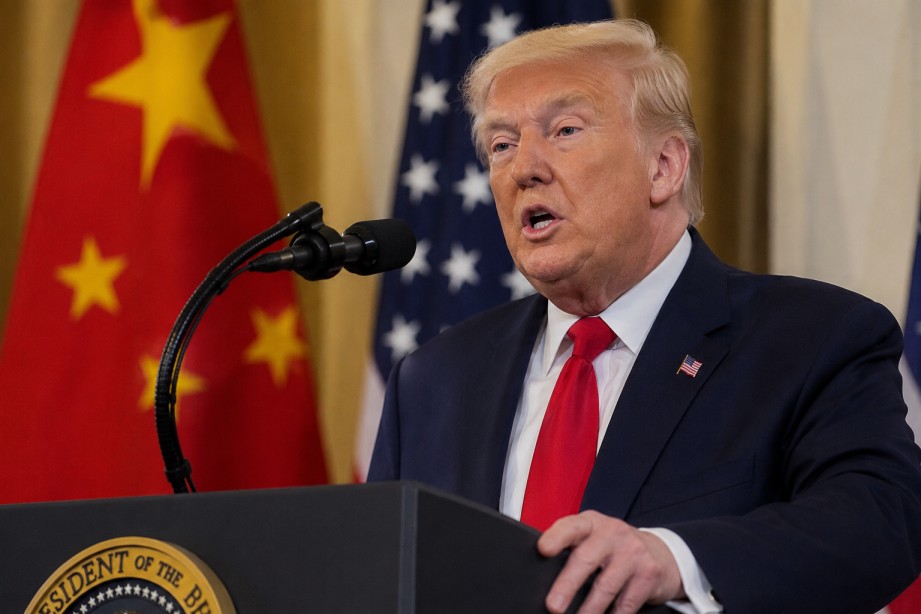
In a renewed accusation, former US President Donald Trump has asserted that China meddled in the 2020 presidential election. Announcing the declassification of certain intelligence documents, Trump has called upon federal agencies to scrutinize what he describes as concealed vulnerabilities in election security. During a televised address, he expressed concerns about the lack of public confidence in the US electoral system and urged the Department of Justice, FBI, CIA, and the Office of the Director of National Intelligence to examine how intelligence related to the 2020 election was managed. Additionally, Trump has encouraged Congress to enact more stringent voter identification laws.
Democratic leaders have dismissed these allegations, emphasizing that extensive investigations, analyses by intelligence agencies, and numerous court decisions, audits, and recounts have consistently found no evidence that foreign interference altered the results of the 2020 election. They argue that Trump’s claims are an attempt to erode trust in the electoral process ahead of the approaching congressional midterm elections.
Meanwhile, China has refuted the allegations, reaffirming its long-standing policy of non-interference in the domestic affairs of other nations. The Chinese government has maintained that these accusations are baseless. Supporting this stance, a US intelligence report released in 2021 concluded that no foreign power, including China, tampered with the technical aspects of the 2020 US voting process.
Critics of Trump’s actions view his latest moves as a strategy to undermine the electoral system’s credibility. They argue that his repeated claims of election fraud and foreign interference, despite contrary evidence, could further polarize the American public and weaken faith in democratic institutions. This ongoing debate over election integrity continues to shape the political landscape as the nation approaches another significant electoral cycle.