
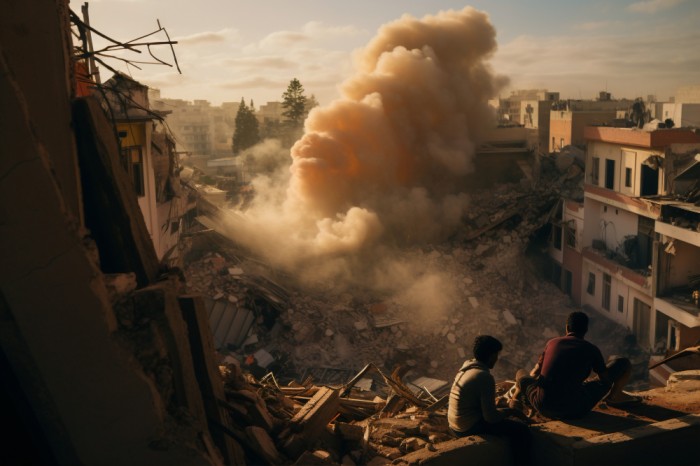
The United States and Iran have once again found themselves in a heated exchange of attacks, raising the specter of a broader conflict in the Gulf region. This escalation began when the U.S. military conducted a series of strikes targeting Iranian assets, including air defense systems and drone facilities. The move was intended to retaliate against an attack on a commercial vessel in the strategic Strait of Hormuz, a critical waterway for global energy shipments. U.S. officials stated that these actions were necessary to mitigate Iranian threats in the area.
In a swift response, Iran’s Islamic Revolutionary Guard Corps claimed responsibility for launching missile and drone attacks on U.S.-linked military sites in Kuwait and Bahrain. According to Iranian reports, these strikes targeted a U.S. air base in Kuwait and a naval facility in Bahrain, though these claims have not been independently verified. This exchange of hostilities has heightened concerns that the already fragile ceasefire between Washington and Tehran could be on the brink of collapse.
Both Kuwait and Bahrain have heightened their security measures following the detection of missiles and drones in their airspace. Authorities in these countries have activated defense systems and issued warnings to residents, advising them to relocate to safer areas. The tension in the Gulf underscores the fragile nature of the current ceasefire and the ease with which it can be disrupted by such military actions.
This latest confrontation follows a pattern of previous U.S. strikes on Iranian military sites, which have been linked to ongoing disputes in the Strait of Hormuz. The waterway remains a pivotal point of contention between the two nations, with each side blaming the other for escalating the situation. U.S. President Donald Trump has accused Iran of breaching the ceasefire agreement, cautioning that further military responses could ensue if tensions do not de-escalate. Meanwhile, Iran has held the U.S. accountable for violating prior agreements and intensifying the conflict.