
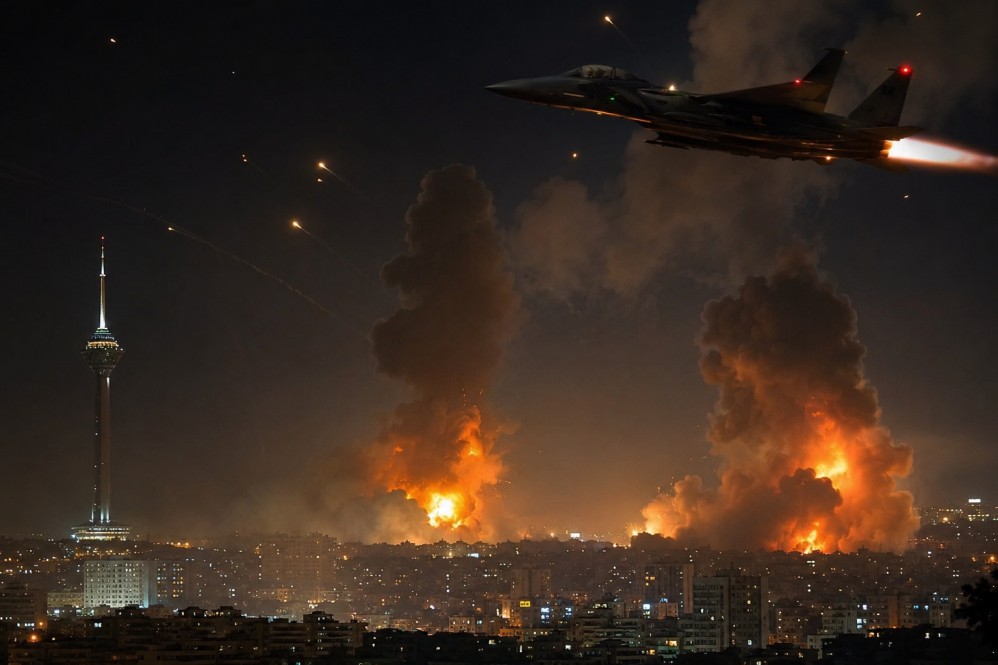
For a third consecutive night, the United States has launched airstrikes against Iran, with President Donald Trump declaring intentions to implement a maritime blockade on the country. This move includes a proposed 20% tariff on cargo traversing the Strait of Hormuz, under the watch of U.S.-controlled security. The U.S. Central Command has indicated that these military actions aim to diminish Iran’s military capabilities and avert assaults on civilian and commercial vessels in this crucial waterway. Trump emphasized that the operations would persist, asserting U.S. control over the strait’s security.
The escalation follows incidents involving two oil tankers from the United Arab Emirates, reportedly hit by Iranian cruise missiles while in Omani waters. These attacks resulted in the death of an Indian crew member and injuries to several others. The growing tensions have already caused a nearly 8% surge in Brent crude oil prices, highlighting the increased apprehension over the stability of global energy supplies.
Iran has sharply criticized the proposed blockade, accusing the United States of jeopardizing international energy security. Tehran warned that any efforts to restrict its maritime navigation would be met with a strong response. Furthermore, international maritime authorities have pointed out that imposing mandatory transit fees in international waterways lacks any legal foundation under existing international law.
The military escalation is fueling fears of a broader regional conflict, as ongoing attacks continue to disrupt shipping routes, accelerate oil prices, and inject uncertainty into the global economy. The strategic importance of the Strait of Hormuz as a passage for a significant portion of the world’s oil shipments underscores the potential implications of prolonged hostilities in the region.